


Options, when carefully used, can really enhance your returns. There are also many pitfalls along the way. I know - I have fallen for some of them.
This series lays out exactly how I use options in managing my partnership, Silver Ring Value Partners:
Part 1 covers the basics, what not to do, and how to use options to enter a position cheaper than without options.
Part 2 describes using covered calls to generate extra income.
Part 3 describes using put options to hedge risk.
Part 4 describes using long dated call options to create asymmetric convex upside with limited risk.
Part 5 describes mistakes I have made with options that you should avoid.
Many value investors avoid using options altogether. I know, as I was one of those investors once. It somehow felt like gambling, or unsafe, or just something that feels wrong for whatever reason.
Well, that reason is pretty simple. It's unfamiliarity. It's not knowing how options really work and how they can be safely incorporated into a long-term intrinsic value investing process.
If you're looking for the Greeks, things like delta, theta, and so forth, or for exotic-sounding strategies like the Iron Condor, well, you're in the wrong place. Those might have their uses for an options trader but they are not at all how I use options within my process.
My approach to using options is driven by my fundamental analysis and my valuation discipline. Having rigorously derived value ranges for my investments works hand in hand with using options to occasionally enhance returns.
The key to using options safely is to make sure that you never, ever, assume unlimited risk. So before we dive into how to use options to enter a position cheaper, let's cover the basics and then talk about ways in which I never use options.
Option Basics
An option is a contract between two parties that is based upon an underlying security such as a stock or an ETF. An option also has an expiration date when the contract ends. Most options that are traded are cleared through an options clearing house or an exchange and therefore you do not need to know, nor do you know, who your counterparty is.
The party that buys the option has certain rights which it can exercise. American style options can be exercised at any point until the expiration date. European style options can only be exercised on the expiration date. For the rest of this series I'm going to assume we're dealing with American style options.
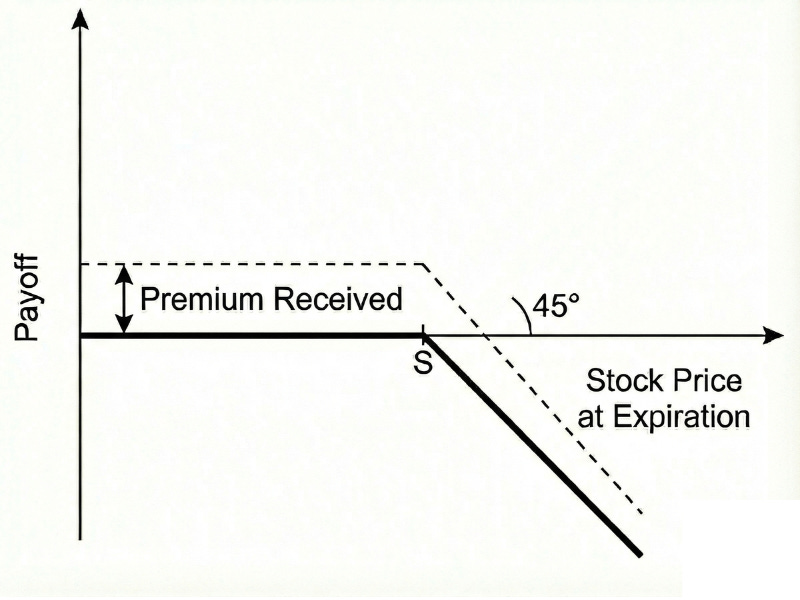
The party that writes or sells an option contract receives a price known as a premium from the buyer. In exchange they have to fulfill their obligations embedded in the option contract if the buyer exercises their rights.
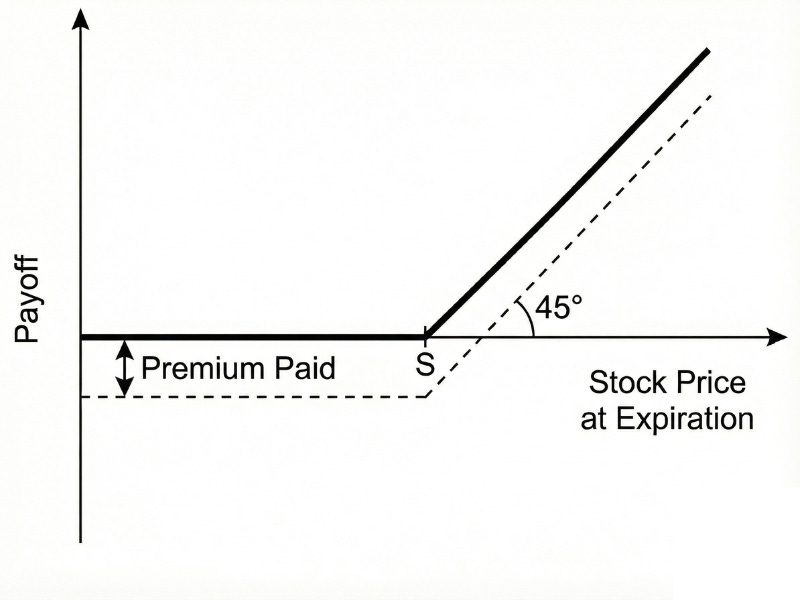
A call option is a right but not an obligation to buy a security at a predetermined price up until the expiration date. That price is known as the strike price. If the underlying security is above the strike price, the call option is said to be "in the money". If it is below the strike price, it is said to be “out of the money”. The buyer of the call option makes a profit upon exercising it if the security is above the strike price.
The payoff profile of buying a call option looks as follows:
The payoff profile of writing or selling a call option looks as follows:
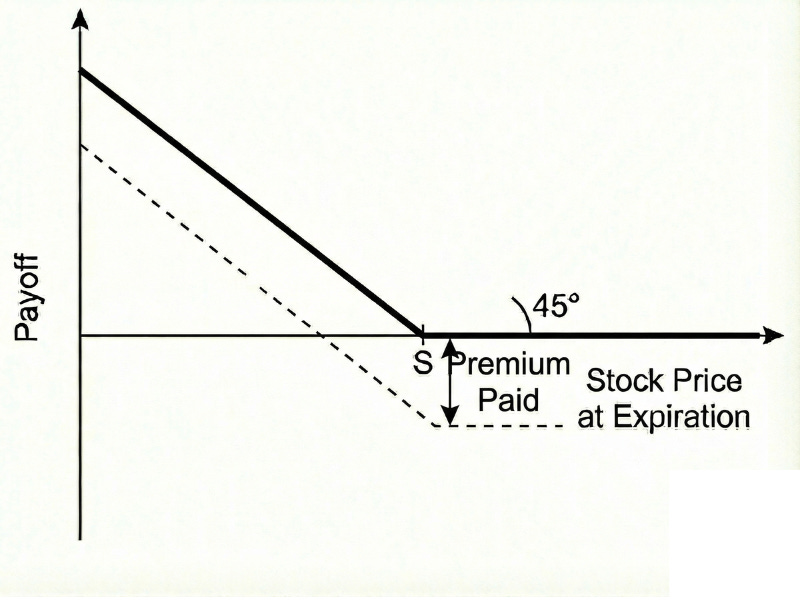
A put option is a right but not an obligation to sell a security at a predetermined strike price up until the expiration date. If the underlying security is below the strike price, the put option is said to be "in the money". If it is above the strike price, it is said to be “out of the money”.
The payoff profile of buying a put option looks as follows:
The payoff profile of writing or selling a put option looks as follows:
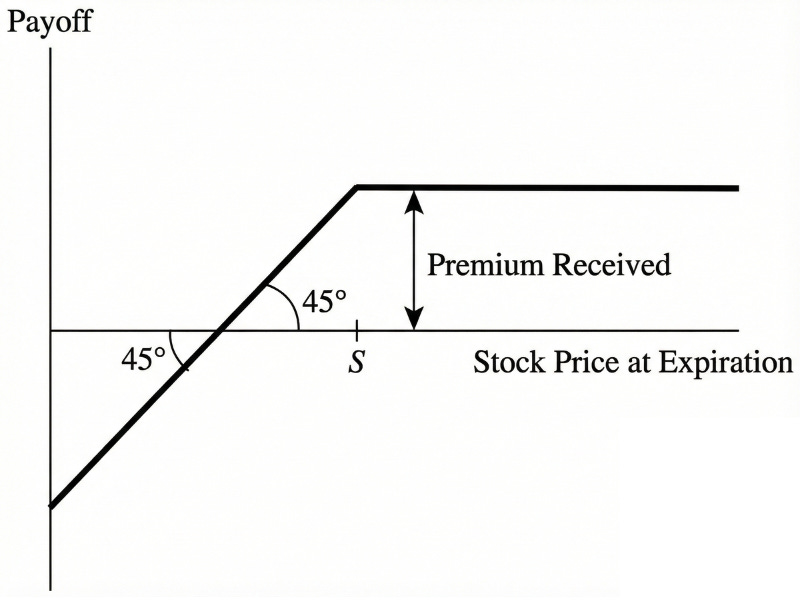
Options, just like underlying securities, are traded on an exchange. Therefore if you own an option you can sell it up until the expiration date.
An option is said to be covered if it is paired with another security, such as the underlying security for the option, in a way that limits or offsets the payout that someone writing the option has to make if it's exercised. For example, a covered call, a strategy that we'll discuss in much more detail in Part 2 of this series, is a combination of owning a stock and then writing or selling a call option on that stock. Conversely when someone sells a call option on a stock and does not own the underlying stock, they are said to be writing a naked call.
Things Not To Do
The human mind is not great at assessing probabilities. Furthermore, overconfidence is one of the deadly sins of investing and we are all guilty of it at least to some degree from time to time.
Therefore the Zeroth Law of using options safely is as follows: Never assume unlimited downside risk.
But, but, but… You have a sure-fire idea that you know can't go wrong? Nope. It can. What's worse is that you're probably not as sure about the probabilities of that happening as you think you are.
So do yourself a favor. Do not assume unlimited risk. How would you assume unlimited risk using options? Well, your risk is by definition limited if you buy an option. So the simplest way to assume unlimited risk is to sell a naked call. Just don't do it.
That's definitely not the only way to go wrong in using options but that's the big one: do not assume unlimited risk. I will cover some other mistakes to avoid as we talk about the individual strategies later on in the series.