


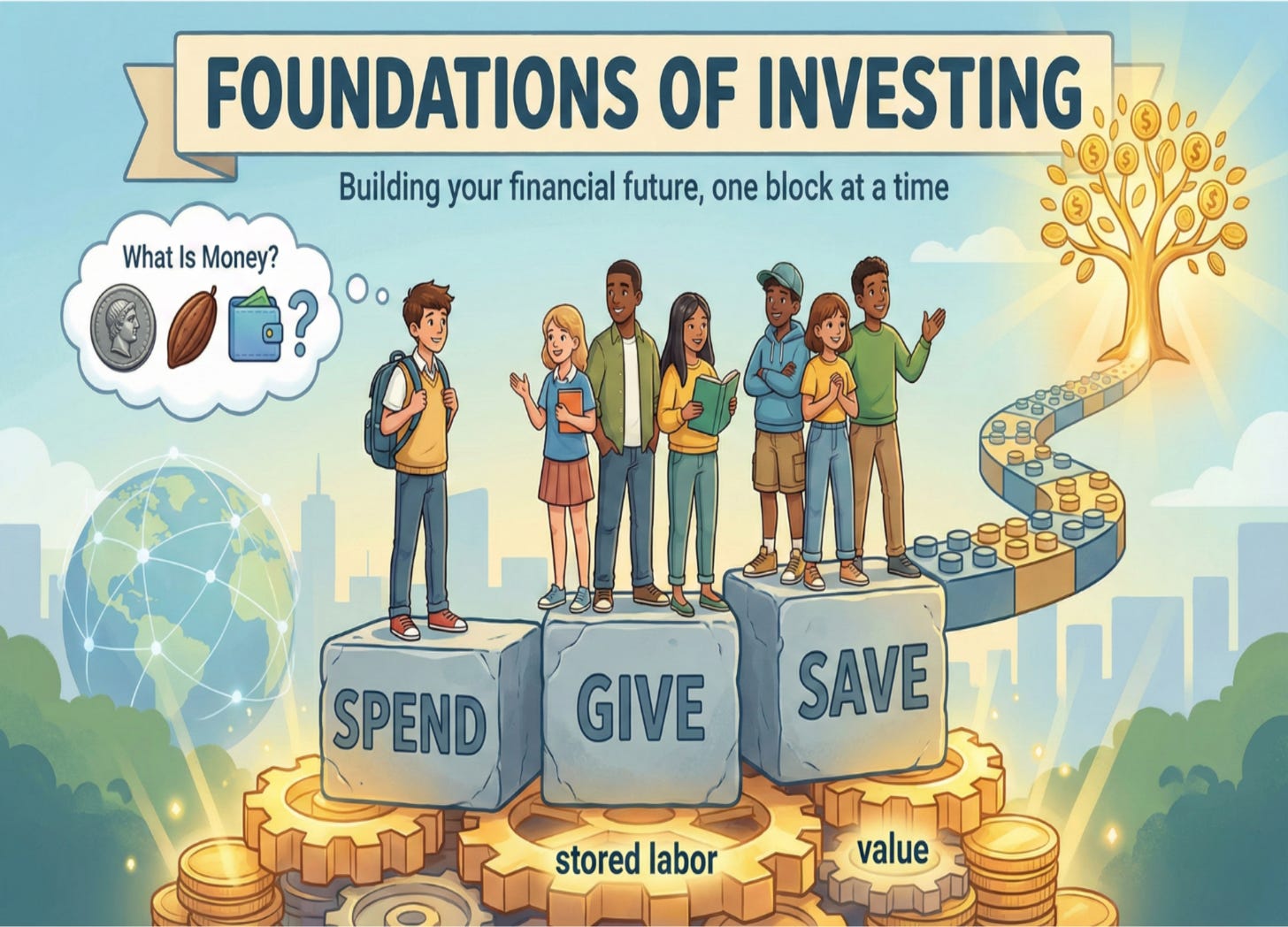
Introduction to Foundations of Investing
As my twins approach the age of 13, they have been asking more questions about what I do as an investor. While struggling to give them simple yet insightful answers, an idea popped into my head: a series on the fundamentals of investing in a way that an intelligent 13-year-old can understand.
It’s not just soon-to-be 13-year-olds who can benefit from this. I have run into many people who are significantly older yet don’t know anything about investing or money but would like to become proficient. They aren’t looking to become veteran security analysts discovering special situations – they want to understand the basics, make their hard-earned money work for them and avoid big mistakes.
This series is for you. It also wouldn’t hurt those of you who are more experienced but want to brush up to make sure their foundation is rock solid before you advance further. So, if you fit this category, get ready, because everything you are about to read has been vetted by an (almost) 13-year-old to be at least somewhat useful and mostly understandable.
No fancy jargon, just important ideas made simple.
Why Does Money Exist?
Let’s start at the beginning. What is money?
When I asked my son that question, his initial response was “paper.” I smiled, because he wasn’t wrong. It just wasn’t all that money is.
“Do you know what bartering means?” I asked. He nodded.
“Imagine you had a farmer who had chickens and another who had cows. The chicken farmer had eggs but also wanted milk, the cow farmer had milk but also wanted eggs. They would bargain and decide that say, 3 eggs were worth a pint of milk and then trade. So far, so good, right?”
“Right.”
“Now, let’s say there is also a baker who bakes bread. He wants milk, but doesn’t want eggs. The cow farmer, however, wants eggs but not bread. Do you see now how they would have to bargain and trade several times just to get what they all want? And that would waste a bunch of their time?”
My son nodded.
“So, money acts as a universal means of exchange so that you don’t have to keep bartering many times to buy what you want and can get that done much quicker and simpler.”
Also, if the chicken farmer in the above example waits too long to trade, his eggs will rot. Money doesn’t rot. It should hold its value so you can spend it next month or next year. While it doesn’t spoil like eggs money can lose purchasing power over time (that’s called inflation, which we’ll cover next).
Money is basically a tool with three jobs: it helps us trade (medium of exchange), it helps us compare prices, and it helps us carry purchasing power into the future, acting as a store of value.
The next day I asked my daughter the same question at dinner, “What is money?”
She immediately shot back: “Value.”
That brings us to the next question: where does money come from?
Where Money Comes From
Contrary to a popular saying, apparently sometimes money does grow on trees. This was the case in the Aztec and Mayan civilizations where the cacao bean served as a primary currency. This “money that grew on trees” was valuable because it could be consumed in a special drink called xocolatl.
However, most of the time money does not grow on trees. So how do you get money?
In most cultures you need to do something of value for someone else in society to get money. The money, in addition to being a universal means of exchange, would then, as my daughter phrased it, represent the value society placed on what you did for others.
The more others value what you did, the more money you would get.
So, one way to think of money is as stored labor. You put in the effort today. That effort benefits others in society. Society gives you money so that you can get things from others that are valuable to you.
Kind of like “do your chores and you will get your allowance,” but on a bigger scale. Most people get money by working, but money can also come from gifts, inheritance, selling something you own, or earning a return on savings/investments - we’ll get to that in future articles.
What You Can Do with Money
There are three buckets of things that you can do with money:
Spend it now
Give it away
Save it for later
You worked hard to help others, and you got paid in money. Clearly spending it right away to derive an immediate benefit is one good option.
However, if you spend it all, you might not be making the best choice.
As you develop life experience, you will realize that there are sometimes people who need help through no fault of their own. You might decide to give some of your money to help those in need. That will not only help them, but it will also give you a sense of fulfillment that just buying things for yourself cannot do.
The final bucket for money that you have earned is what you choose to save for the future. Why save?
Because you might not be able to work every day of your life but still would like to be able to buy things. Or because you want to make a very large purchase that requires many months, or even years, of work to be able to afford.
How to divide your money among these three buckets is up to you. However, it’s usually a good idea to make sure you are putting at least some of the money you earn into each one.
The Least You Should Know
Money is something that is universally accepted by society in exchange for goods or services that you want to buy
You can think of money as stored labor: your work added value to society, and society gives you money to allow you to get value from others
The three things you can do with your money are spend it, give it away or save it for another day
Coming Up Next
What is inflation, and how does it destroy the purchasing power of your money?
Do you know any young folks, or their parents, who could benefit from the Foundations of Investing series? Please share this article with them to help them get a solid financial foundation early in their life.
Disclaimer: Not financial advice, for educational purposes only.
About the author
Gary Mishuris, CFA is the Managing Partner and Chief Investment Officer of Silver Ring Value Partners, an investment firm that seeks to apply its intrinsic value approach to safely compound capital over the long-term. He also teaches the Value Investing Seminar at the F.W. Olin Graduate School of Business.
Gary, thanks for this! I might be wrong but I believe in the paragraph where you introduce the baker, you meant to say that the cow farmer wants eggs but not bread, instead of milk.