


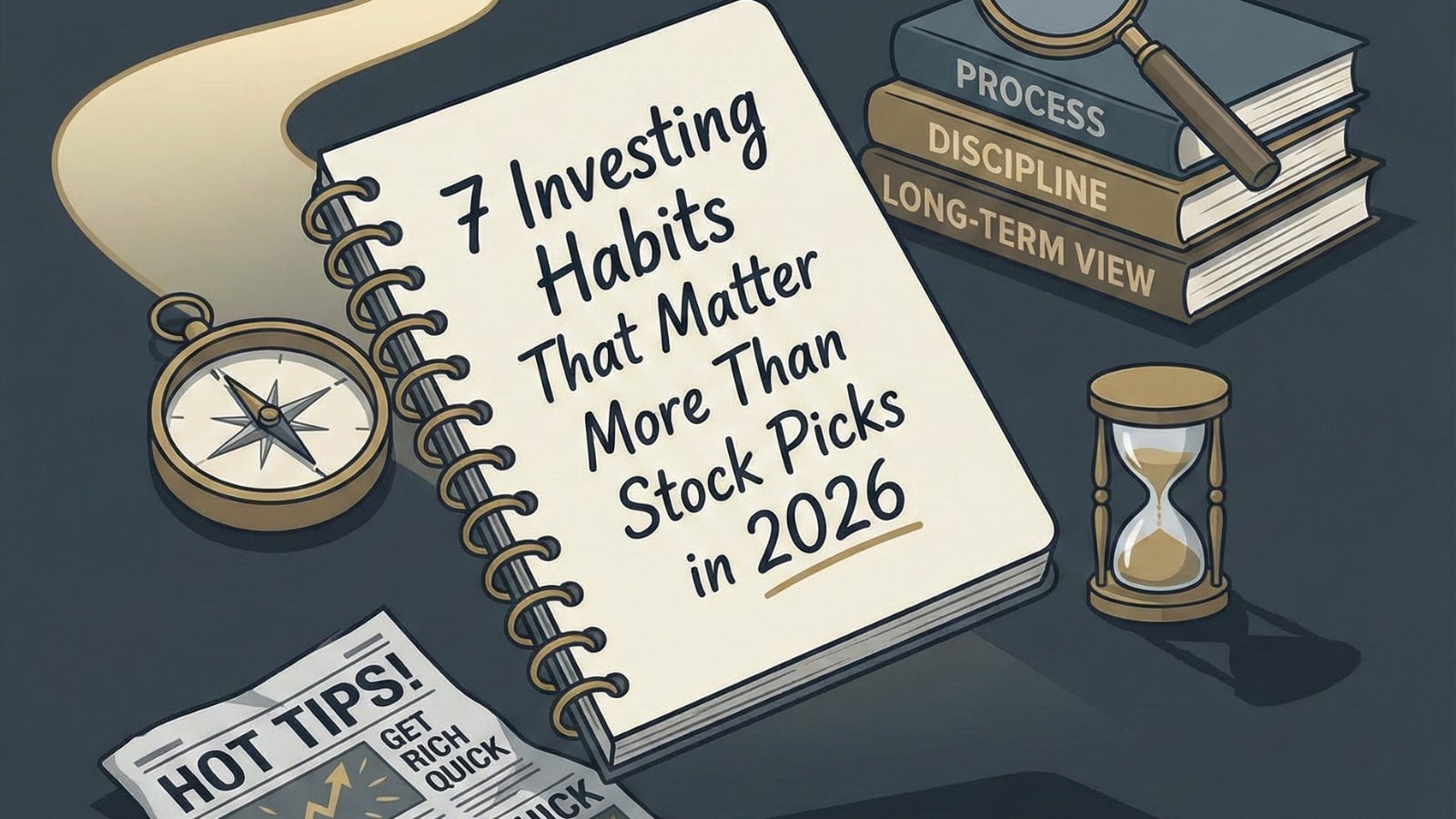
Forget stock tips, get rich-quick schemes or investment products that sound too good to be true. Real investing is slow and not at all easy.
You should also have realistic expectations, especially considering the recent high returns in the market. Before you extrapolate them and assume that unless you are making 20%+ a year that you are failing, start with what long-term returns have actually been:
U.S. Treasury Bills long-term returns = inflation
U.S. 10-Year Bonds long-term returns = inflation + 2%
U.S. Stocks long-term returns = inflation + 6.5%
One of the most common behavioral biases is base-rate neglect, or ignoring history because you think you are very special and what has happened to others in similar circumstances doesn’t apply to you. This is particularly deadly to your investing results when combined with the overconfidence bias.
Before you look at the above historical returns and think you can do way better, because, well, you have genius-level stock picking skills, consider that the best U.S. large cap investors who have track records spanning several decades have beaten the market by around 3% per year. The best small cap investors have beaten the market by around 5% over the very long-term.
That’s not to mention the 90%+ of investors who have done worse than the market.
I have always told my partners at Silver Ring Value Partners that if we achieve long-term returns of inflation + 10% with low risk of permanent capital loss, that that will be an excellent result. So, when someone is touting how their stock portfolio returned 100%+ last year or selling you some product that seems to offer 15%+ annual returns, be very, very careful.
So, what should you do in 2026 to improve your investing? This list, while less exciting compared to sensational promises of various promoters, is likely to keep you out of trouble and on solid footing:
1. Be Honest with Yourself
This is a good time of the year for self-reflection. With respect to investing ask yourself a few questions:
Are you investing in a way that makes sense to you and fits with your strengths and circumstances?
Are your goals realistic?
What areas of your investing process could be improved?
Are you putting in the time during the year to work on the important but not urgent areas to get better, or are you so focused on the details that you are stagnating?
Improvement isn’t easy, but the first step is to admit to yourself where you can do better and come up with a plan for how to improve.
2. Improve One Thing
Don’t try to change too many things at once. Pick one thing to work on for 2026, and really work on that in a deep and thoughtful way.
For example, maybe your self-reflection led you to believe that you need to have a better process for generating new ideas. Or perhaps you want to get better at judging the quality of management teams of investments that you are considering.
Whatever it is, don’t say “Oh, I am going to become amazing across the board in 2026!” Instead, come up with a realistic plan for getting better at just one thing. Then – no excuses, execute on it throughout the year.
3. Do Less, Not More
In markets, activity usually just rewards the brokers. Long-term investing requires infrequent, but decisive, action.
The rest of the time is spent reading, studying companies and improving as an investor.
Don’t grade yourself on what you have done in the market. Focus on reading, learning new companies and improving your process.
That beats the heck out of following every wiggle in the prices of the popular stocks and every comment from the pundits. Work hard, but act less.
4. Ignore What Others Are Doing
You should always think from first principles. Who cares what others are buying?
They are not you. You aren’t them. Your circle of competence is different from theirs.
At most, if you notice that an investor you respect buys something, you should use it as a signal to investigate it further using your own process, not to automatically follow them. After all, they aren’t going to be holding your hand when the going gets tough and you need to decide what to do next with the investment.
Oh, and pay no attention to whatever is hot or the topic du jour on social media or in the financial press. Stick to what you know and understand well.
5. Focus On Process, Not Results
You can’t control the market. Or how your portfolio is doing this month, quarter or year.
What you can control is what you do.
You can control how you spend your time. What you read. How hard you work. Where you look for ideas. How you improve yourself as an investor.
The results, over time, will be a residual of the inputs that you put in. Don’t try to force it, you will get the results that you deserve in due course.
6. Keep High Investment Standards
As we approach 2026, the investment environment is pretty dangerous. Valuations are high. Market sentiment is largely positive. It’s hard to find good investments that combine both high quality and a margin of safety.
The danger is that you slowly relax your standards and begin to convince yourself that perhaps you should pay up more or move down the quality spectrum. Neither is a good idea.
Be patient. Investment opportunities that meet your appropriately high standards will come.
7. Be Prepared to Act on Your Convictions
When a great opportunity that fits within your circle of competence does come, be ready to act. Not just timidly, in a half-hearted way. To paraphrase Warren Buffett, when it’s raining gold you don’t want to be out with a thimble.
I remember when I was a young analyst at Fidelity in the early 2000s. Peter Lynch came and gave a talk to the whole investment department, analysts and PMs. His main point was that good ideas are rare. When you find one, he told the PMs, don’t just slightly over-weight the position, double or triple weight it.
The PMs nodded, and then for the most part went back to their business as usual of staying close to the benchmark. It might be safer, but in a way that almost guarantees market (less fees) returns.
When a great opportunity comes, you will feel uncomfortable. You won’t have all the answers. However, if you do all the work and it merits it, then make sure to make it an appropriately large position.
Conclusion
This list might not sound very exciting. You won’t get rich quickly if you follow the habits above. But then again, chances are you won’t get rich quick if you follow some promoter’s scheme that seems exciting in the moment. They, on the other hand, just might.
However, investing is not about big short-term results. It is about a well thought out process that fits you and that is applied with skill and discipline. That’s the best path that I know to safe and good returns in the long run.
What investing habit do you think should have made the list? Please leave a comment below, I read and respond to every one. And if this article helped clarify your thinking, please restack it to help others.
Happy New Year!
Disclaimer: Not financial advice, for educational purposes only.
About the author

Gary Mishuris, CFA is the Managing Partner and Chief Investment Officer of Silver Ring Value Partners, an investment firm that seeks to apply its intrinsic value approach to safely compound capital over the long-term. He also teaches the Value Investing Seminar at the F.W. Olin Graduate School of Business.
Consistency compounds.
I would go a step further and say that I would run from anyone bragging about significantly outperforming the market right now. At the very least, I would ask if they are a fiduciary and have a GIPS-compliant track record actually managing real money. It’s one thing to post a list of stocks on the internet, it’s another thing entirely to accept the fiduciary responsibilities of such actions.
Roughly 80% of the S&P 500’s gains over the last three years have come from AI stocks, and I count nearly half of the market weighting of the S&P tied to that theme. If someone doubled the market return in 2025 they likely had more exposure to this theme, or owned lower quality stocks exposed to this theme. They are probably better at story telling than they are at understanding investors like Graham and Buffett, and they are probably from the under-40 generation that has never had to experience any real pain in the financial markets.
If I were looking for someone to manage my money right now, I would want to hear someone telling me that they flat out will not keep up with the S&P 500 if this continues, that they are de-risking the stock portfolio, and giving me ideas for diversification beyond AI. That doesn’t mean that this can’t continue for several more years, but that’s what a fiduciary would do.