

If you haven’t read the guide to the 10-Minute Investment Autopsy series, you can find it here. You will get the most out of each case if you:
Pause after the “Original Thesis” section and think about what you would have done
Engage with the discussion questions and other members in the weekly thread designed to help you further improve your investing process
The Original Thesis
Who: Josh Tarasoff
When: June 2012
What: Amazon.com Inc (ticker: AMZN)
The Thesis:
Josh’s thesis was:
Amazon is the finest business of which Josh is aware, and it is very cheap.
The company has a structural competitive advantage vs. physical retailers in terms of price, selection, convenience, personalization and habit formation.
You can see its cost advantage in higher inventory turnover with Amazon at 12x vs. Walmart at 8x and Target at 6x as well as lower shrinkage.
Physical low-cost retailers cannot offer personalized selection, but Amazon can.
Amazon is habit-forming, and habits form through repetition and are highly influential on shopping behavior.
Amazon’s competitive advantages are becoming bigger with time.
The company has excellent management with long-term focus.
Historical sales growth has been high and has recently accelerated to 40%
Amazon has only 1% of the categories in which it competes.
Even if growth reverts to the mean over the next decade, future growth over the next 10 years should be high, in the 20% to 30% range.
Consensus for overall future e-commerce penetration is too low and could reach 20% in 10 years.
GAAP operating margins are depressed because of investments such as new categories, Kindle and AWS.
Josh believes that normalized operating margins should be higher than Walmart US’s and Target’s which are 7% and 8% respectively.
Exceptional economics with normalized ROIC at 90%+.
Valuation at 39x trailing normalized P/E is very low when considering extremely high growth and returns on capital.
Assuming that normalized EBIT margins expand from 7% but the P/E multiple contracts, the stock should return ~30% over the next decade.
Stock currently trades at the low end of the range of historical normalized P/E with the market heavily penalizing it for the current aggressive level of investments.
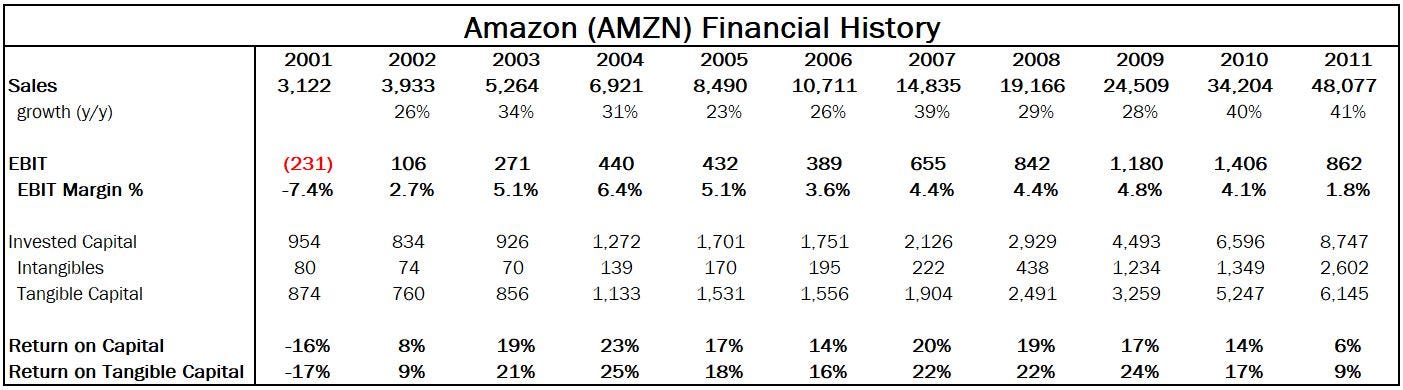
These are the highlights of Amazon’s then-recent financials up to the point when Josh was presenting his thesis:
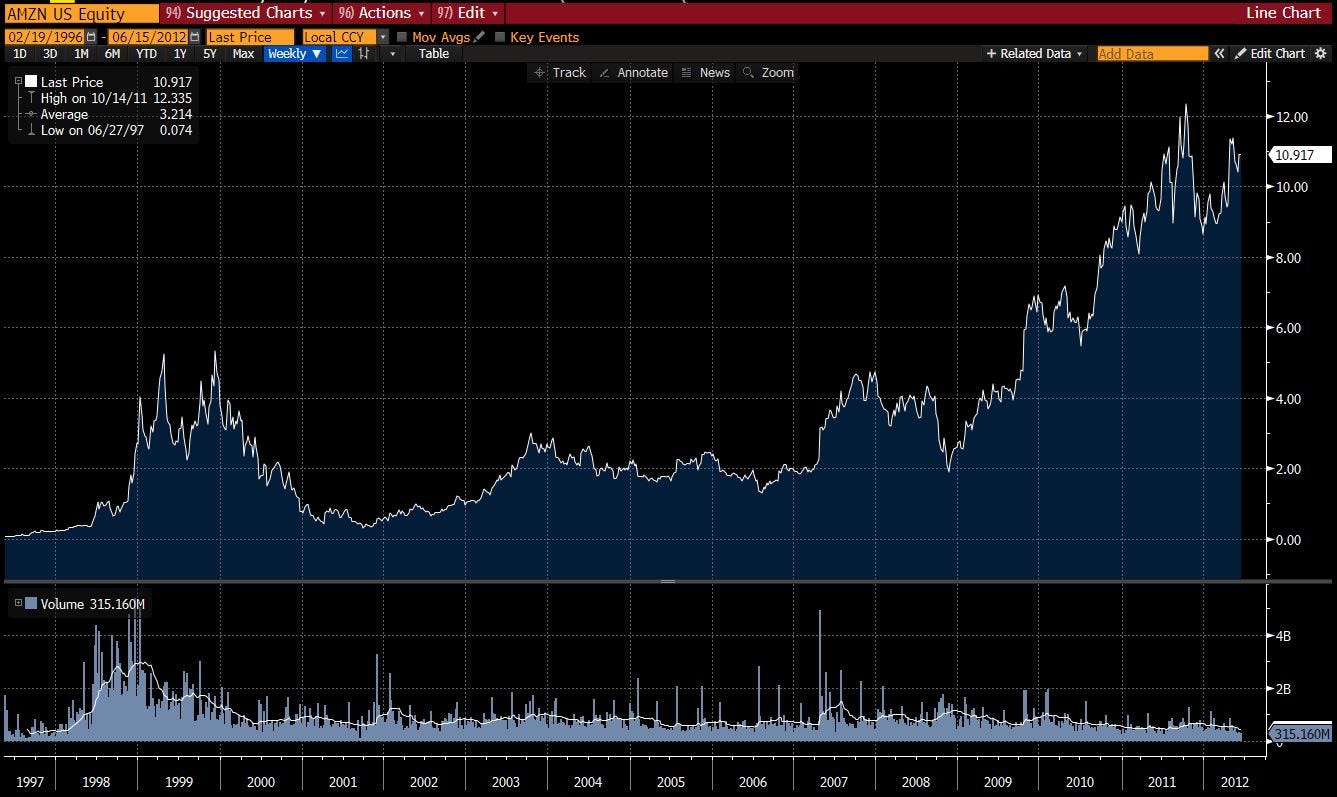
This is the stock chart up until the time that Josh presented his thesis:
Pause here. Think through the thesis and the facts and decide what you agree with, what you disagree with and whether you would invest based on the information available.
What Happened (Just the Facts)
Amazon’s financials following Josh’s presentation were as follows:
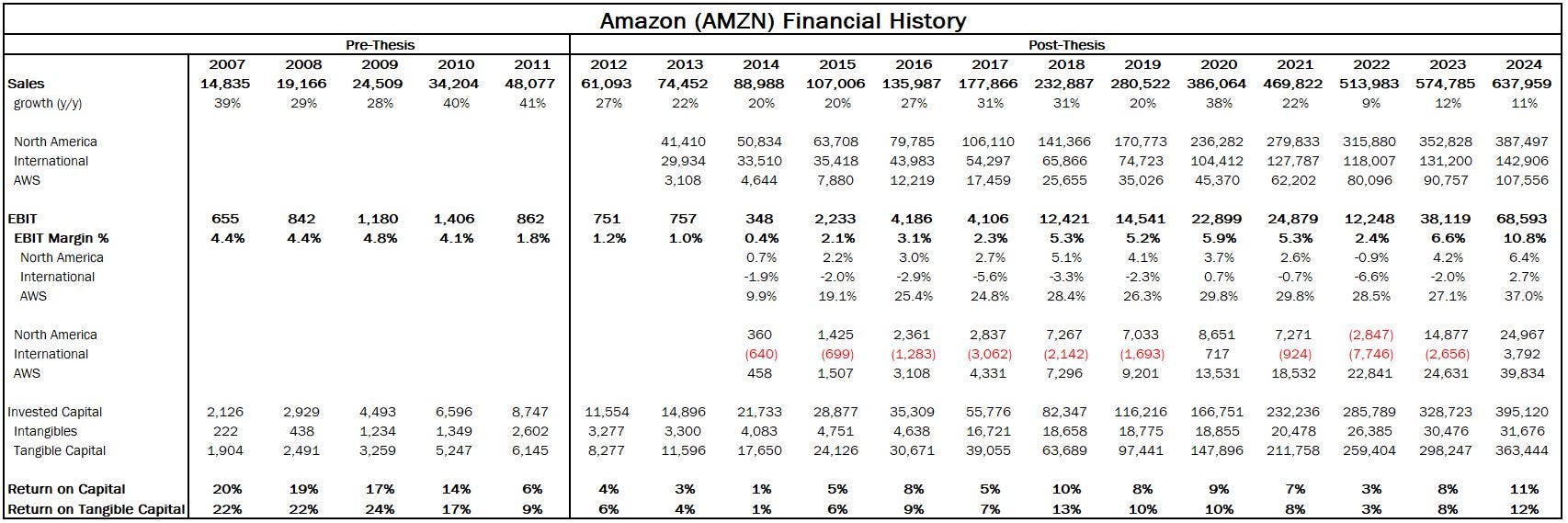
Over the decade between 2012 and 2022, total sales grew at a 24% CAGR and EBIT grew at a 32% CAGR.
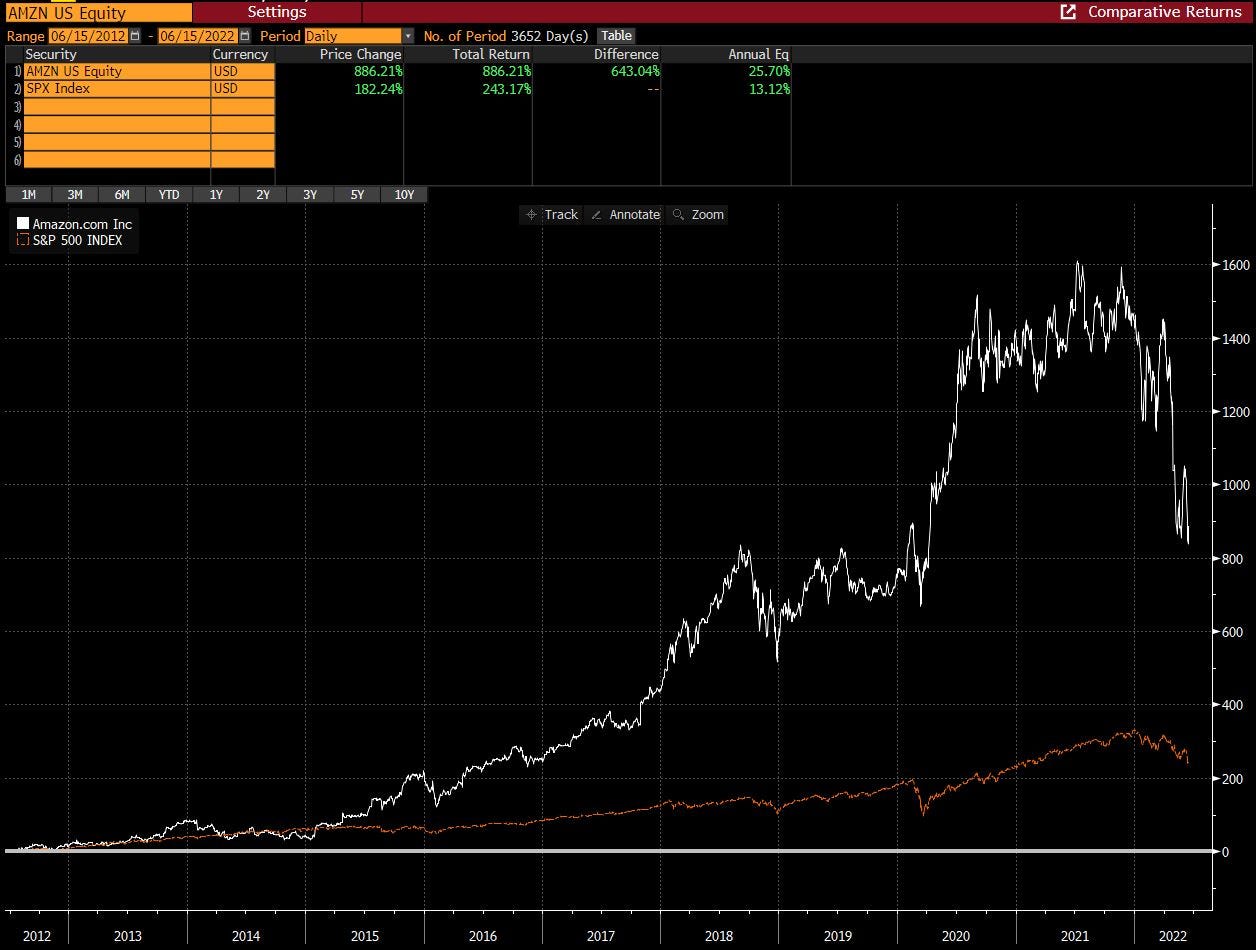
The stock compounded at 25.7% for the 10 years after Josh’s presentation, exceeding the returns of S&P 500 by 12%+ per year
Extending the end point until 2026, the stock compounded at 25% per year, 10% per year ahead of the S&P 500
There is a lot more to the case:
The Autopsy - the reasons for what happened
The Lessons that you can apply to your own investing
Discussion Questions for you to think about and discuss with other thoughtful investors in the weekly case thread